Île-de-France
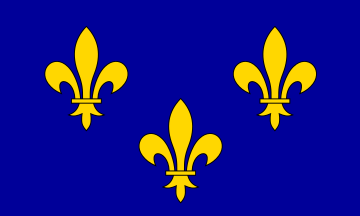
The flag of Île-de-France displays the ancient royal arms of France: three golden fleurs-de-lis on a blue (azure) field, arranged two-and-one. This design, known as 'France modern,' was adopted by King Charles V around 1376, reducing the earlier semé of fleurs-de-lis to just three in honor of the Holy Trinity. As the historical domain of the French kings centered on Paris, Île-de-France naturally bears the royal arms themselves. The fleur-de-lis — stylized lily or iris — has been the quintessential symbol of French monarchy since the 12th century, and this azure-and-gold arrangement is one of the most famous heraldic designs in world history.
Despite its name meaning 'Island of France,' Île-de-France is not an island — the name likely refers to the land between the rivers Seine, Marne, and Oise which form a rough 'island' shape.
Adopted: 1376