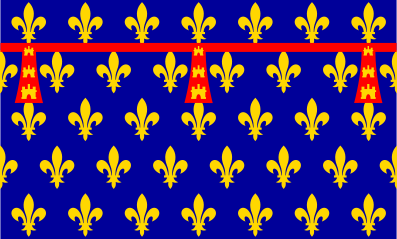
Artois
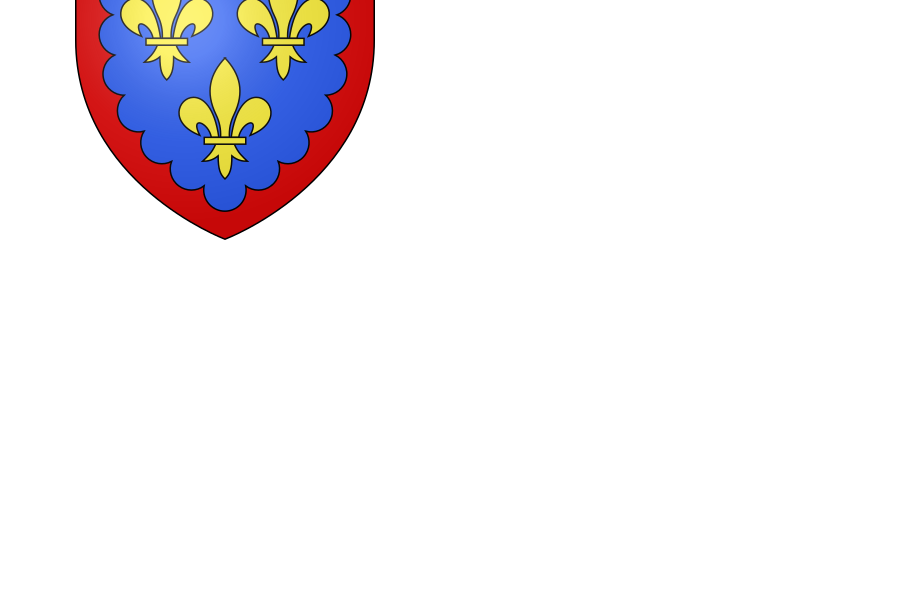
The flag of Artois bears a blue field strewn with golden fleurs-de-lis (semé de lis), overlaid with a red label of three points — a heraldic difference mark indicating a cadet branch of the French royal house. This design dates from 1237 when King Louis VIII granted the County of Artois to his son Robert as an apanage. The label distinguishes Artois from the royal arms of France (which use the same blue and gold fleurs-de-lis), marking it as a subsidiary territory of the crown. Artois, centered on Arras, was a strategically vital territory contested between France, Burgundy, Spain, and the Habsburg Empire for centuries.
Artois gave its name to artesian wells — the first European well drilled deep enough to tap pressurized groundwater was bored near the town of Lillers in Artois in 1126.
Adopted: 1237